Prepare Your Personal Loan Application the Right Way
Building a solid personal loan application begins long before you submit forms.


Understanding what they look for and organizing your information in advance can help you present a clearer application and avoid delays, though approval always remains subject to the lender’s assessment.
Many borrowers with less-than-perfect credit worry that applying is pointless. That mindset can actually be costlier than taking time to prepare.
Lenders don’t expect perfection; they look for evidence that you understand your finances and can manage the new loan responsibly.
This article walks you through the practical steps to get ready.
Know What Lenders Will Review
Canadian personal loan lenders follow a standard evaluation process, though specific criteria vary by institution. Understanding their perspective helps you identify gaps in your application before submission.
Lenders first examine your credit report and score. This shows your borrowing history, payment record, and outstanding balances.
If you’ve missed payments or carry high credit card balances, that signals risk. However, a lower score doesn’t mean automatic rejection—many lenders work with borrowers across the credit spectrum.

Next, they verify your income and employment.
Most require recent pay stubs (typically two or three months) and sometimes a letter from your employer confirming your role and salary.
If you’re self-employed, you may need tax returns or financial statements. They want proof that your income is stable enough to cover the loan payment.
Your debt-to-income ratio matters significantly. Lenders add up all your monthly debt payments (credit cards, car loans, mortgage, student loans) and divide by your gross monthly income.
A higher ratio suggests you’re already stretched; a lower one suggests room to take on a new payment.
Finally, lenders check your banking history. They may verify that you maintain an account and manage it responsibly. Some ask for recent bank statements showing regular deposits and reasonable account activity.
Organize Your Documents Now
Accuracy and completeness reduce avoidable delays, though approval remains subject to the lender’s final assessment. Before you apply, gather the documents you’ll need so your information is consistent and ready.
- Two to three recent pay stubs from your current employer, showing your name, employer, gross pay, and year-to-date earnings.
- Recent tax returns (typically the last two years) if you’re self-employed, a contract worker, or own a business.
- A recent bank statement or two showing your account balance, regular deposits, and account activity over the past 30 to 60 days.
- A list of all current debts: credit cards, car loans, student loans, mortgage, and any other outstanding balances with monthly payment amounts.
- Proof of residence, such as a utility bill or lease agreement dated within the past three months.
- A valid government-issued ID (driver’s license or passport).
Having these items ready before you start an application lets you fill out forms accurately the first time. Errors or missing information often trigger follow-up requests that slow approval.

Review Your Credit Report Before Applying
You’re entitled to a free copy of your credit report from both Equifax Canada and TransUnion. Ordering a report before you apply lets you catch errors and understand what lenders will see.
Check for inaccuracies such as accounts you don’t recognize, wrong payment statuses, or duplicate entries.
If you spot errors, dispute them with the credit bureau directly. Corrections can take weeks, so start this process early.
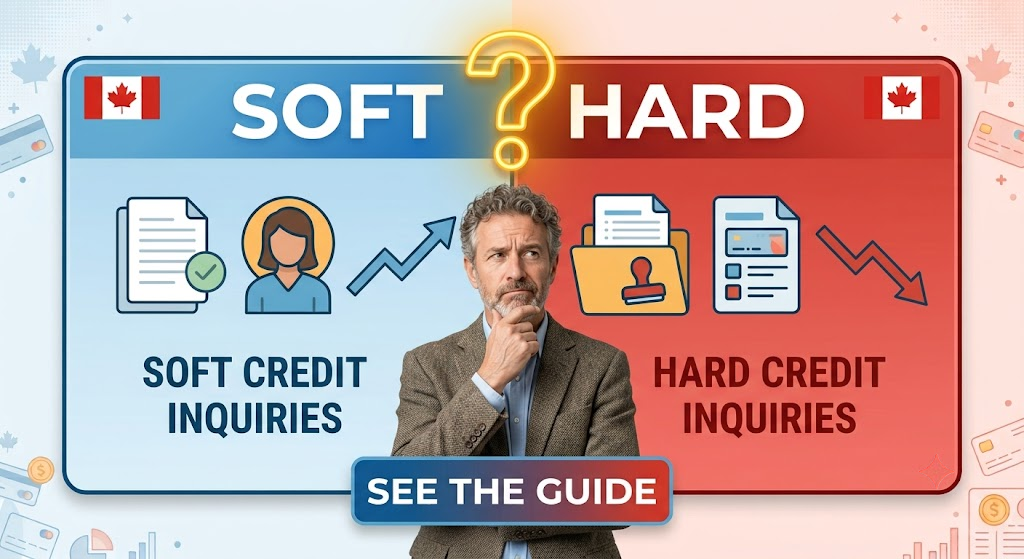
Also review your credit inquiries. A hard inquiry (which happens when you formally apply for credit) can temporarily lower your score. Soft inquiries (like pre-qualification checks) do not.
Before submitting your application, confirm with the lender whether they’ll perform a hard or soft inquiry first. This varies by provider.
Understanding your report also helps you explain your situation honestly on the application. If you had a period of financial hardship (job loss, illness, emergency expense), many applications ask whether you want to add a written explanation.
Being transparent about past struggles while showing what’s changed since then can strengthen your case.

Assess Your Ability to Repay
Honest repayment planning protects you far more than securing approval at any cost. Before you apply, make sure the loan amount and term make sense for your budget.
Calculate your monthly payment using the lender’s estimate. Add it to your other fixed obligations—mortgage or rent, utilities, insurance, childcare, groceries, transportation.
If the total leaves little or no breathing room, a larger loan isn’t the answer, no matter how readily approved you might be.
Federal, provincial and territorial consumer protection laws require lenders to assess your ability to repay before they approve you.
This protects both of you. A lender that skips this step or makes approval conditional on features like payday advance plans is a red flag.
Also consider the loan’s purpose. If you’re consolidating high-interest credit card debt into a personal loan at a lower rate, the math makes sense.
If you’re borrowing to make a purchase you’re not sure about, take more time to decide.
Choose a Loan Term That Fits Your Situation
Personal loans in Canada typically range from $1,000 to $50,000, with terms between one and seven years.
A shorter term means higher monthly payments but less interest overall. A longer term lowers the monthly payment but increases total interest paid.
There’s no universally “right” choice. Your budget and priorities determine it. If you can comfortably afford a higher monthly payment and want to minimize interest, a shorter term works.
If you need monthly flexibility and can accept paying more interest overall, a longer term might suit you better.
Many lenders let you see sample payment schedules before you formally apply. Use those to compare options and see what fits your income and expenses.
Verify Lender Legitimacy and Terms
Never compromise safety when borrowing. Before submitting your personal information, confirm the lender is licensed and regulated in Canada.
Check with:
- The lender’s provincial regulator (for example, Financial Services Regulatory Authority in Ontario).
- The Better Business Bureau Canada for complaint history and ratings.
- Online banking and financial review sites for recent customer feedback.
- The lender’s website for clear contact information, physical address, and regulatory disclosures.
Legitimate lenders disclose their annual interest rate (APR), all fees (application, administration, prepayment penalties), and terms upfront.

They never guarantee approval, instant funding, or claim they don’t check credit. Those are hallmarks of predatory lending.
Read the full loan agreement before signing. If anything is unclear—fee calculations, payment schedules, consequences of late payment—ask the lender directly. Reputable lenders welcome questions.
Prepare to Explain Your Credit Situation
If your credit isn’t perfect, many applications ask whether you want to add context. This is your chance to be honest and brief.
For example: “I had a job loss in [timeframe].
Since returning to stable employment [timeframe], I’ve made all payments on time.” Or: “I co-signed a loan that the other party defaulted on, but my own payments remain current.” Focus on what changed, not excuses.
Lenders understand that life happens. What they assess is whether you’ve learned from the situation and are now managing your finances more responsibly. Transparency builds credibility.
Gather Your Savings and Create a Buffer
If possible, have some savings in your account when you apply. Lenders see this as evidence that you’re building financial stability.
Even $500 to $1,000 visible in your bank statement signals you’re not living paycheck to paycheck.

Also plan for a buffer after approval. Don’t borrow the maximum amount just because you qualify.
Borrow what you genuinely need. This leaves room for unexpected expenses and makes the loan easier to manage month to month.
Time Your Application Wisely
If you’ve recently had a major negative event—a missed payment, collection account, or default—waiting a few months before applying can improve your odds. Credit bureaus weight recent events more heavily.
However, lenders also assess whether your recent history is positive. If you’ve made six straight on-time payments after a rough period, that improvement matters.
Avoid applying multiple times in a short window. Each hard inquiry can lower your score slightly. Space applications at least 30 days apart if you’re shopping with multiple lenders.
Explore Pre-Qualification if Available
Some lenders offer pre-qualification, which uses a soft credit inquiry and gives you an estimate of the loan amount, term, and rate you might qualify for.
This doesn’t guarantee approval, but it shows what’s realistic without affecting your credit score.

Pre-qualification can help you decide whether to proceed to a formal application.
Note that the type of credit inquiry varies by provider—confirm whether a soft or hard inquiry will be recorded before you submit your details.
In Summary
Preparing a strong personal loan application isn’t about hiding problems or inflating your income. It’s about presenting an accurate, complete and organized picture of your finances so lenders can make a fair assessment.
Prepare your documentation, review your credit report, understand your budget, and verify lender legitimacy before you apply.
These steps won’t guarantee approval, but they can reduce delays, help you avoid predatory offers, and increase the likelihood of terms that actually work for your situation.
Personal lending in Canada is competitive. Lenders want to work with borrowers they trust.
By doing your homework first, you show that you’re serious, responsible, and realistic about borrowing. That’s the foundation of a successful application.